
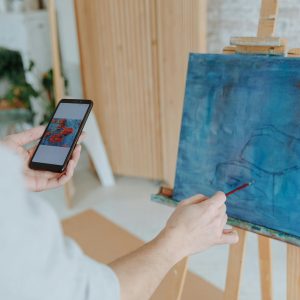
Navigating the blurry line between "innovative tools" and "stolen creation" in the digital age.
Welcome back to the debate. In Part 1, we established that artists have been “cheating” for centuries. From Vermeer’s alleged use of the camera obscura to the Renaissance grid method, tools have always existed to bypass purely freehand struggles.
But the modern landscape feels different. With the explosion of 3D modeling, photobashing, and the ultimate disruptor—Generative AI—the definition of “cheating” is undergoing an intense cultural stress test. Where does the artist end and the algorithm begin?
This interactive guide is designed to help you explore your own ethical boundaries, understand the community’s perspective, and maybe cure a little bit of that pervasive artist impostor syndrome.
The "Cheating" Spectrum
Click through the techniques below. How do you feel about them? We've categorized common artistic aids from traditional referencing to full AI generation.
Looking at a photo, a model, or an object and drawing it freehand. This is the bedrock of traditional art learning. You are translating 3D space (or a 2D photo) through your own brain and hand.
Drawing a grid over a reference photo and a matching grid on your canvas to ensure perfect proportions. Used heavily in the Renaissance and by photorealism artists.
Drawing directly over a photograph or someone else's 3D render to get perfect linework. Often highly controversial if not disclosed, but widely used in commercial storyboarding and comic backgrounds.
Taking multiple photographs, merging them in Photoshop, and painting over them to create concept art quickly. The industry standard for AAA game and film concept art.
Typing text prompts into models like Midjourney or DALL-E to generate a complete image. The user acts as an art director rather than a creator in the traditional sense.
The Perception Gap: Artists vs. The Public
Are we our own harshest critics? Recent survey data shows a massive divide in what working artists consider "cheating" compared to the general public, especially concerning modern digital workflows.
Approximately 70% of creative professionals expressed concern that AI tools could diminish the value of human-made art, while 54% of the general public were open to AI-assisted content. Source: The Harris Poll / Google Search Central (2023-2024)
Final Verdict: Is Tracing really Cheating?
The line between ‘innovation’ and ‘cheating’ isn’t drawn by the tool you use, but by the transparency of your process. As we move further into a digital-first creative economy, the value of an artist will shift from manual execution to creative direction and ethical authorship. Whether you are photobashing for a AAA studio or using the grid method for a personal portrait, professional success depends on your ability to deliver results while maintaining the standards set by organizations like the Graphic Artists Guild. Use the tools, master the tech, but always keep your human intent at the center of the work.
Add a Comment