“Does expensive always mean better? A practical guide to choosing your tools, ignoring the critics, and focusing on what truly matters: your art.“
The Dilemma of the Brand Purist
This section explores the social pressure beginners face in the art community. It addresses the common misconception that premium brands are a prerequisite for creating quality art.
An art supply store probably runs on magic spells to bewitch artists into hoarding supplies. Not that I’m complaining, but there is a breed of art purists and enthusiasts that can be quite judgmental about the supplies used in a piece of art. Art supply snobbery—bullying artists into using only widely accepted, expensive brands—is pretty common in creative communities.
Let’s introspect. Imagine you meet an artist whose work you’ve never seen. You start chatting, and they throw in some generic brand names they use. Does it throw you off? Do you assume mediocrity in their work? Why is it assumed that it takes expensive art supplies to make good art?
“I’ve rarely seen customers or clients bother about art supplies if the execution is flawless. The journey is about your choices, not popular opinion.”
Discover Your Artistic Objective
To navigate the crowded market of art supplies, you must first define your goal. Select your current objective below to reveal tailored advice on selecting your tools without falling into the hype trap.
Focus:
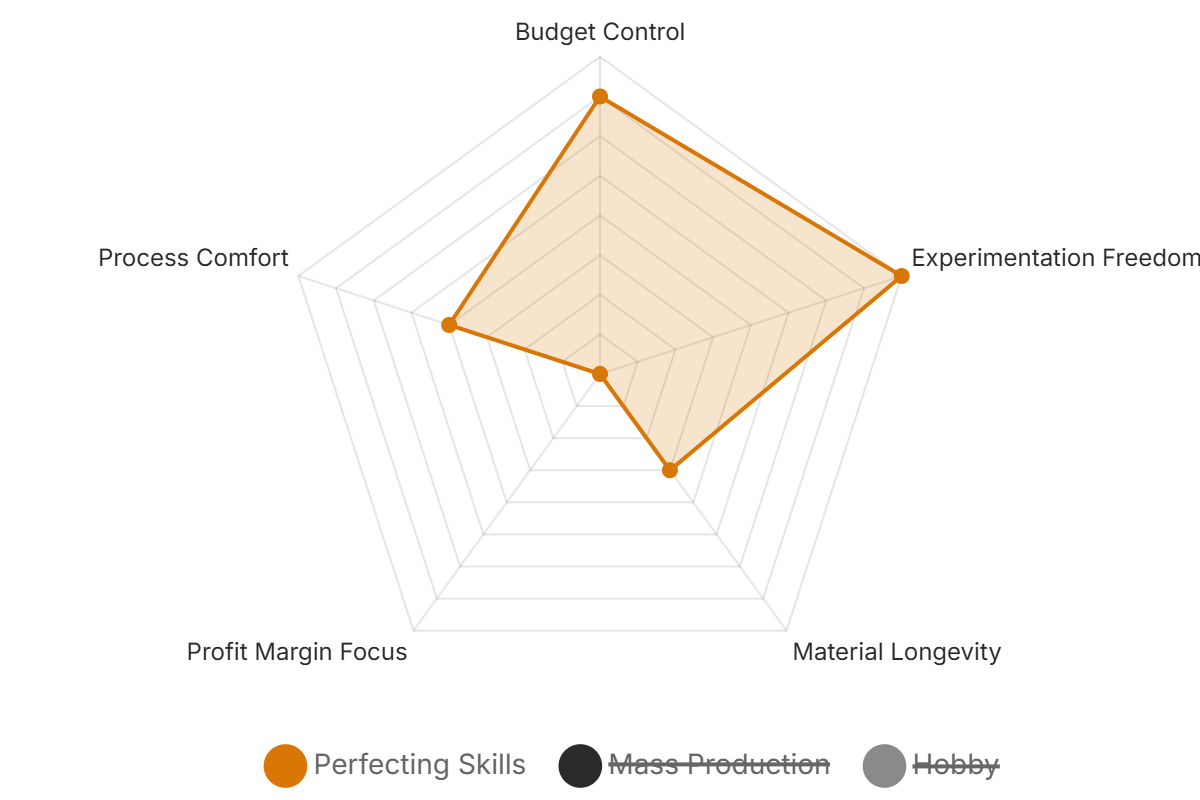
Perfecting Skills
If you are new to a medium, your foremost objective is learning. Do you start with the costliest tools? No. Hold your horses before you go all out.
Test the waters: Understand common challenges of a medium before committing financially.
Exhaust resources: Push your limits with limited, affordable resources. It works wonders for skill-building.
Remember: The end objective is to create something you are happy with, not ‘what’ you create it with.
Exploration > Brands: Being a stickler for specific brands early on will hold your exploration back.
Focus:
Mass Production for Sale
When commercially exposing your work, the ‘Business of Art’ takes over. Economies of scale and profit margins are imperative if this is your income.
Balance Quality and Cost: Good quality is needed for market expectations (especially in handicrafts for shelf life), but using ultra-expensive materials for low-market-value items ruins your margins.
Skills Shine Through: The client evaluates the final execution, not the brand label on your paint tubes.
Find the Balance: Choose products that fit your style *and* your economic objectives.
Focus:
Ease of Creation & Convenience
A creative mind needs to be a free mind. The process relies heavily on comfort with a medium. You must experiment to find your ‘Sweet Spot’.
The Sweet Spot: Achieving perfect results with the *right* resources for you, not necessarily the *most expensive* ones.
Acknowledge Limitations: Know what works for you considering your financial limitations.
Context is Key: An artist specializing in ‘Coffee Painting’ doesn’t need to buy the most expensive espresso beans to make great art!
Focus:
Pursuing a Hobby or Interest
Hobbies and splurging usually go hand in hand. If you have a stable income and paint for joy, the strict economics of production don’t apply.
Splurge Without Guilt: You don’t have to worry about profit margins. Buy the nice brush if it brings you joy.
Low Stakes: Production failures don’t hurt financially, allowing for massive hesitation-free experimentation.
Taste Development: This freedom helps you develop a refined understanding of different material qualities.
The Resource Priority Matrix
This chart conceptually visualizes how different artist profiles should prioritize their focus when selecting art supplies, proving that there is no “one size fits all” brand or price point.
The Final Takeaway
Creativity doesn’t rely on the quality of art supplies. It relies on what you can create with what you have. Artists have all the right to splurge, but that does not drive their creative thought process.
Don’t let the snobs blindside you. Experiment, exploit what you have, and enjoy the process of creation. It’s not the art supplies that create an artist, but the art itself.

Add a Comment